Scanner
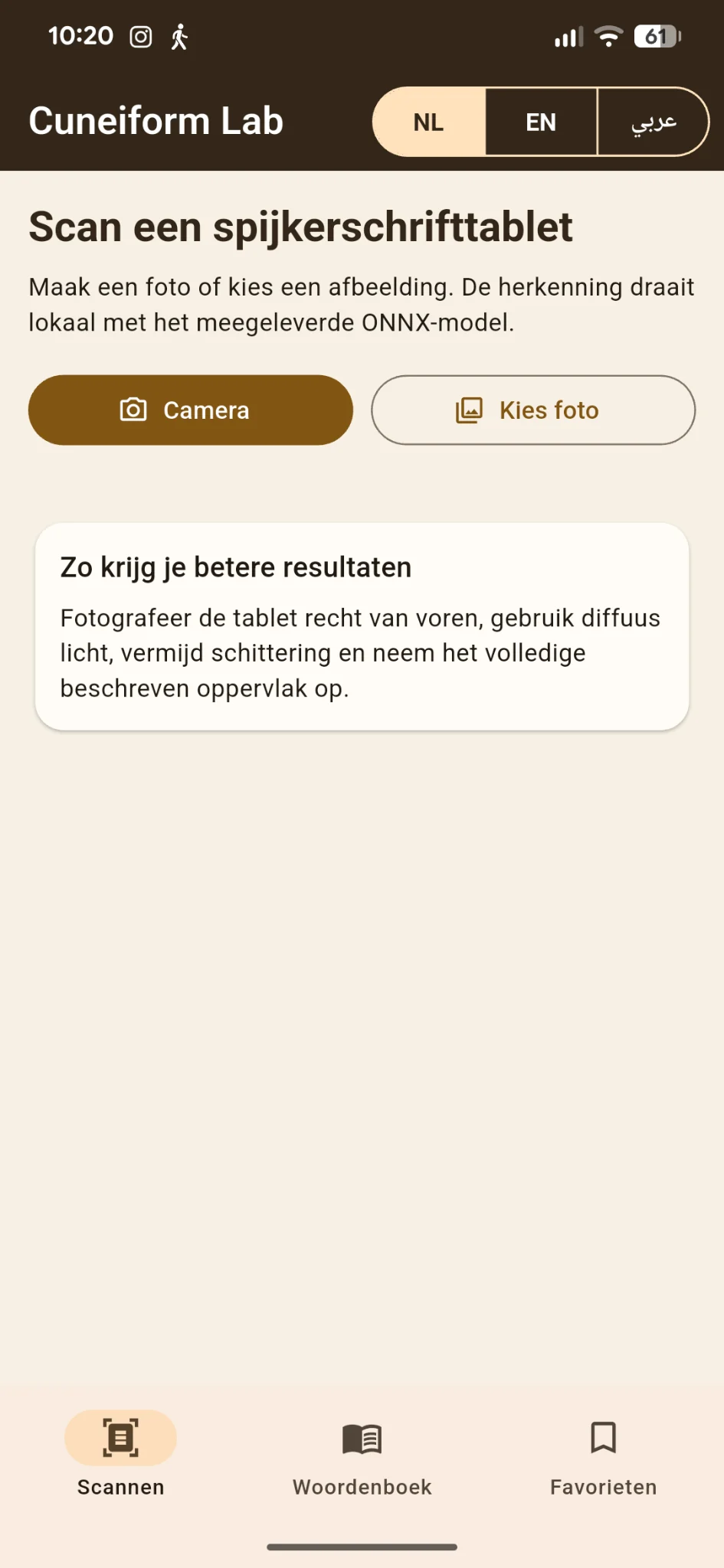
Select or capture an image of a clay tablet and submit it for automated analysis.
Five thousand years of writing, explored with the possibilities of modern digital technology.
Cuneiform Lab is a digital research project by Rinus van Hagen. The application explores how image recognition and linguistic data can support the identification and study of cuneiform signs on images of Mesopotamian clay tablets.
The app is designed for use on a smartphone. Its calm interface, inspired by clay and parchment, brings together the scanner, sign information and a personal research collection.
These screens show the current development version. The design and features continue to evolve through testing.
The wedge-shaped impressions on Mesopotamian clay tablets preserve an extraordinarily rich history.
Cuneiform was used to record economic transactions, but also laws, religious texts, scientific knowledge, literature and historical events. Reading these sources requires knowledge of sign forms, languages and historical context.
Cuneiform Lab explores how digital image recognition can support the analysis of these sources. An image of a tablet can be submitted to a recognition model, which returns possible sign identifications with confidence scores.
The application connects visual material with information about cuneiform signs and their possible linguistic meanings.
Select or capture an image of a clay tablet and submit it for automated analysis.
A neural network analyses visual features and returns possible identifications with confidence scores.
Recognitions can be connected to cuneiform signs, Unicode, transliterations and meanings.
Results are compared with historical sign forms and require scholarly validation.
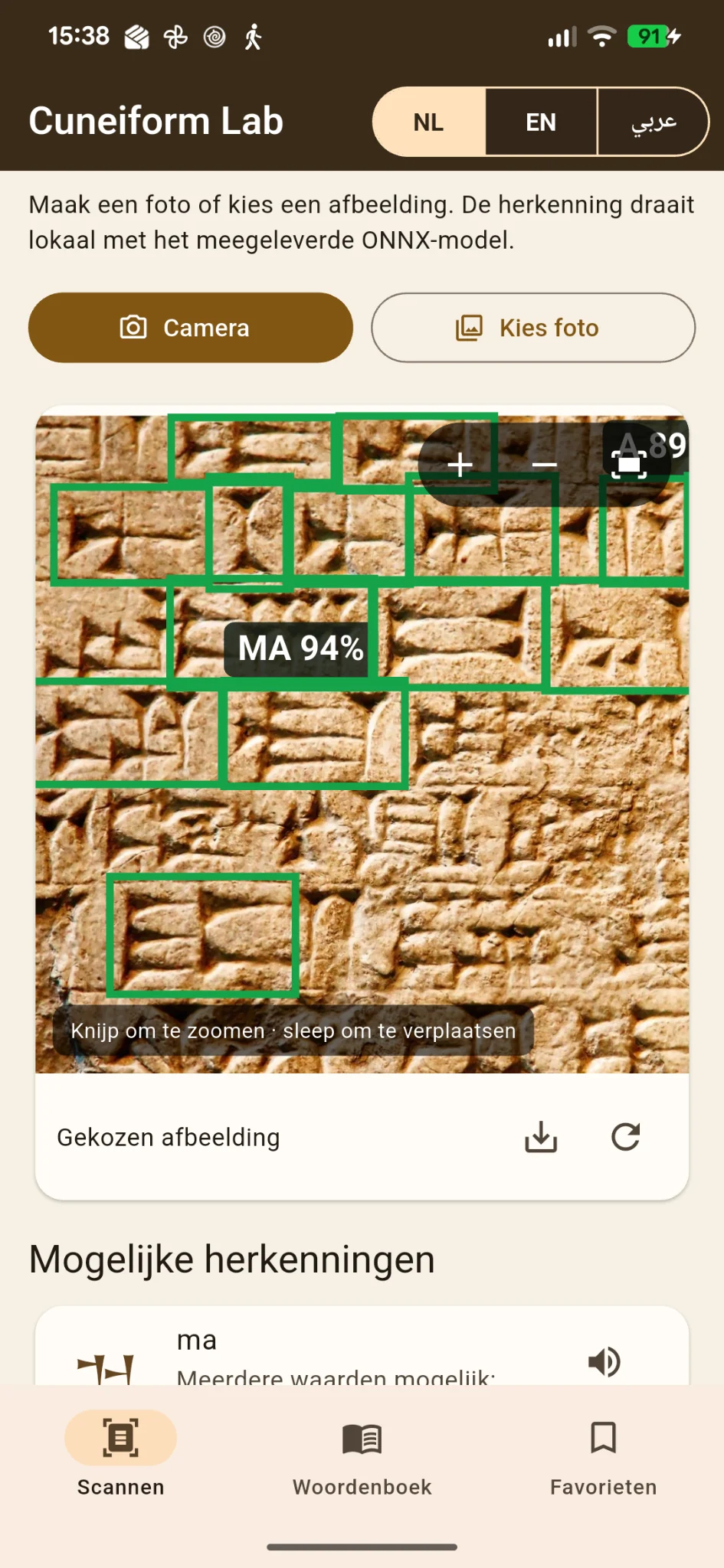
After an image is selected, the model analyses the visible forms. Results appear as boxes on the photograph, accompanied by possible sign identifications and model scores.
These are model suggestions, not automatic philological conclusions. Checking the tablet, textual context and reliable sign lists remains essential.
The current recognition model works with 173 model classes. For each prediction, the application displays a confidence score: an indication of how strongly the model supports that result. Such a score is not proof that an identification is historically or linguistically correct.
Cuneiform signs can have different values depending on language, period and context. Damage and variations in writing make recognition more complex. Model outputs are therefore treated as research leads that must be checked against reliable sources.
The digital dictionary is being expanded with sign forms, transliterations, meanings and additional information. The relationship between the 173 model classes and historical signs also requires systematic verification.
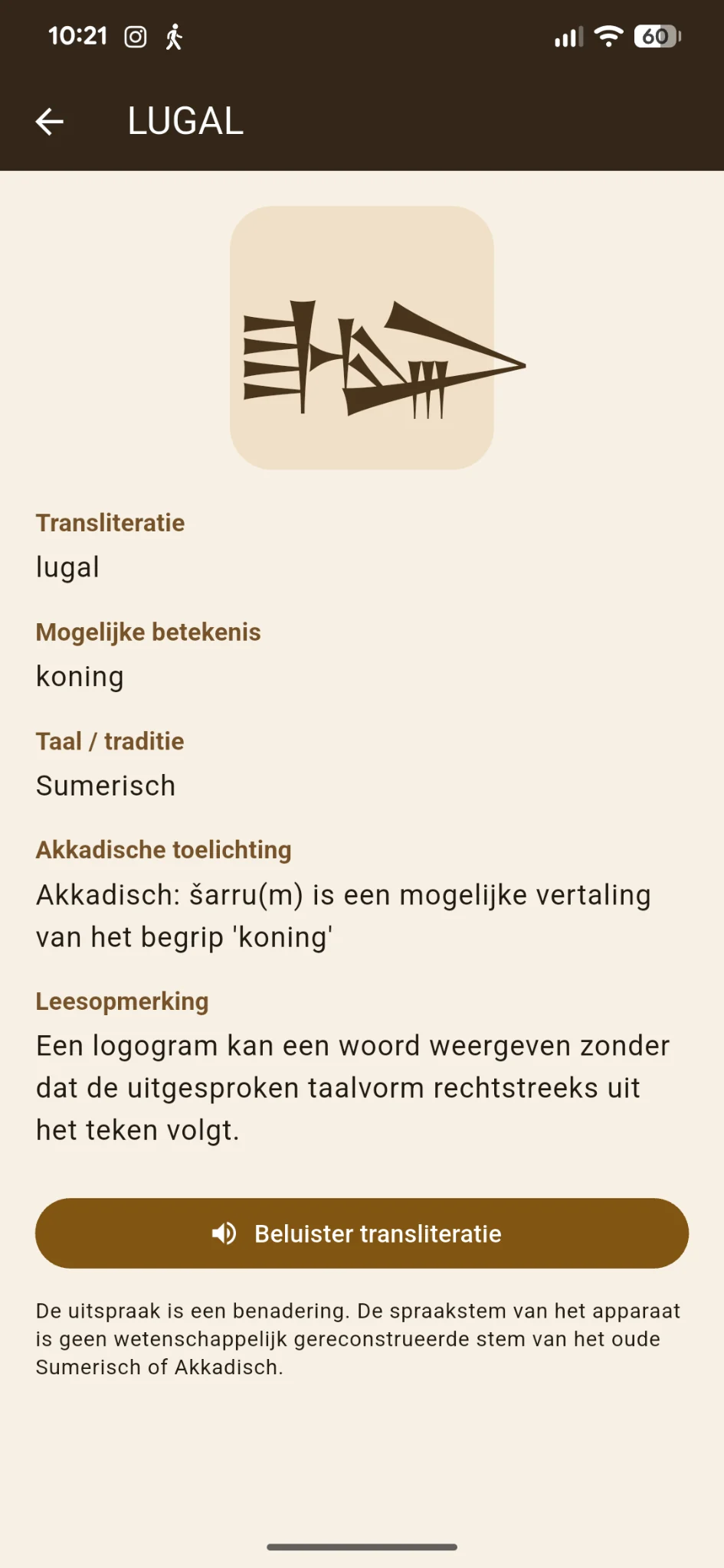
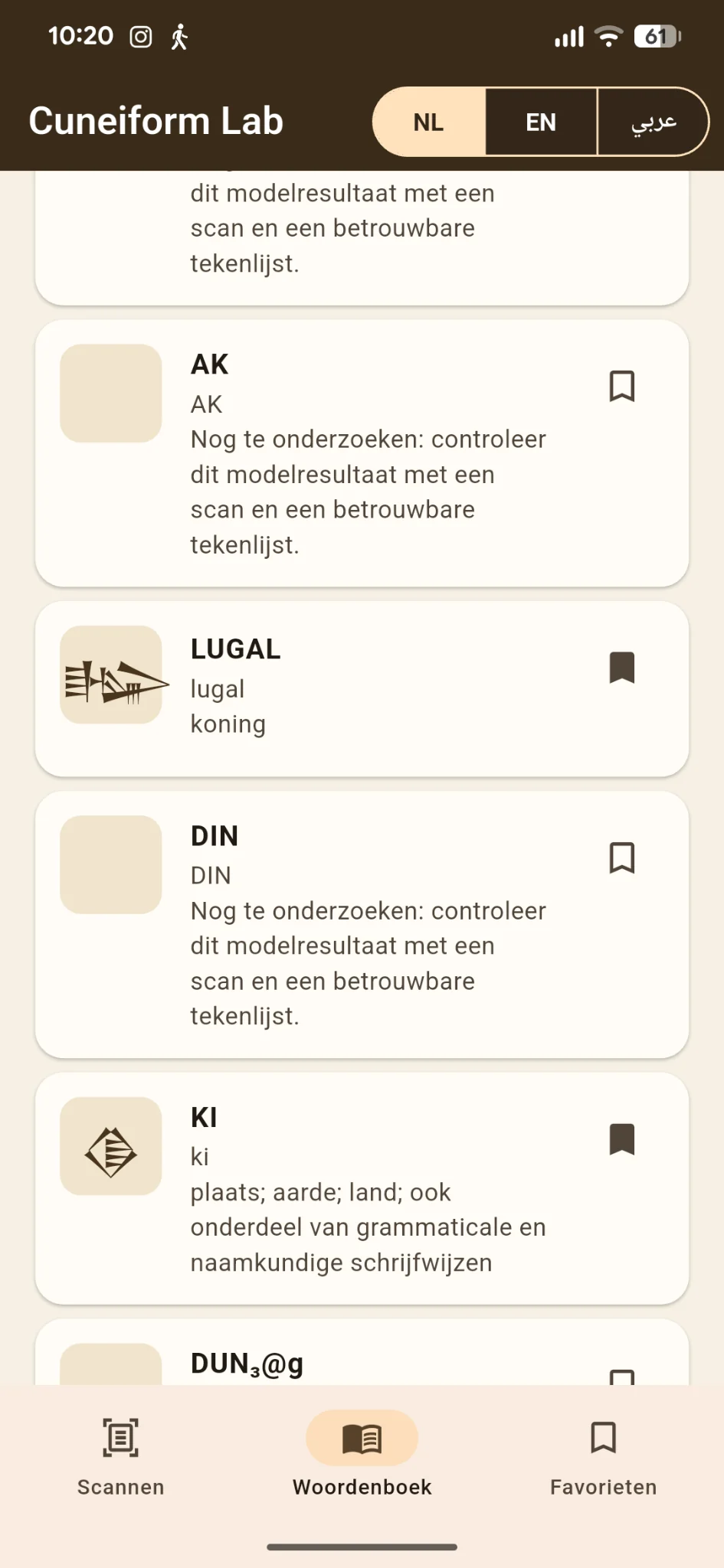
The dictionary connects sign forms with transliterations, possible meanings and linguistic notes. Where relevant, it also explains relationships with Sumerian and Akkadian forms.
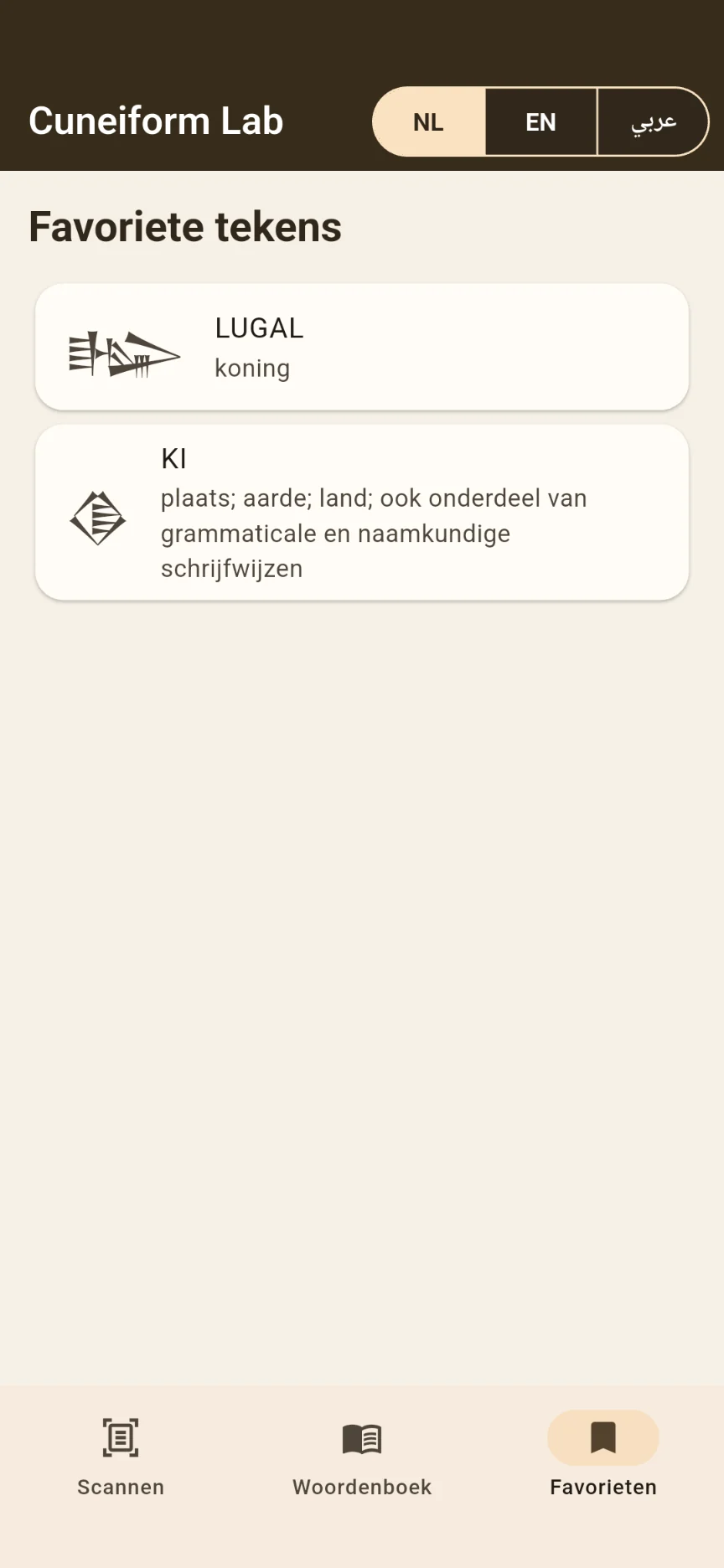
Interesting signs can be saved to Favourites and revisited later. The app is therefore intended to become more than a scanner: a small digital workspace for the study of cuneiform.
Cuneiform Lab is not a replacement for Assyriological methods. It explores how digital technology can support the study of cuneiform by analysing images systematically, presenting possible sign identifications and making information about signs easier to connect.
Development remains focused on the interaction between technology and human expertise. A sign can only be properly understood when recognition is considered alongside language, text and historical context.