History · Research · Publications

Understanding the past.
Reading stories anew.

I am Rinus van Hagen: cultural historian, author and independent researcher. My interests include the history of the Ancient Near East, Mesopotamia and cuneiform — and the people and societies we come to know through their written sources.

The history of Mesopotamia and cuneiform — made accessible to everyone.

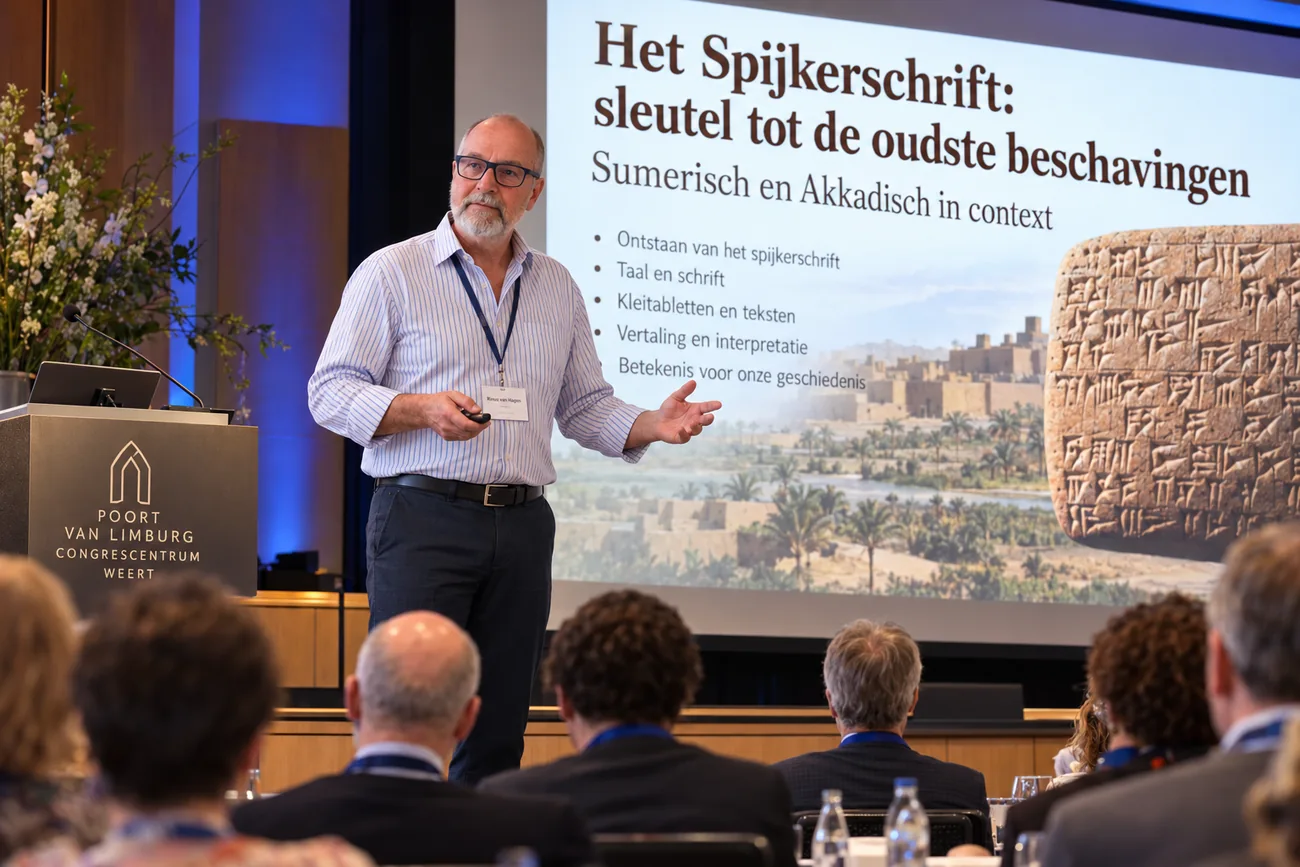
Rinus van Hagen explaining Mesopotamian cuneiform to an audience
Rinus van HagenCultural historian, author and researcher
An important announcement

Retirement and the end of teaching activities

After a long period of research, writing and publishing, the time has come for me to retire. This also marks the end of my teaching activities. My lessons are therefore no longer available.

My books and publications remain available to everyone who wishes to learn more about the earliest civilisations of the Ancient Near East, Mesopotamia and cuneiform writing.

As explained in my earlier email, I informed you well in advance of my retirement date and the fact that the lessons would come to an end.

I hope you enjoyed following my lessons and learned a great deal from them. Thank you for your interest. I wish you every success and enjoyment as you continue to explore the fascinating history of Mesopotamia and cuneiform.

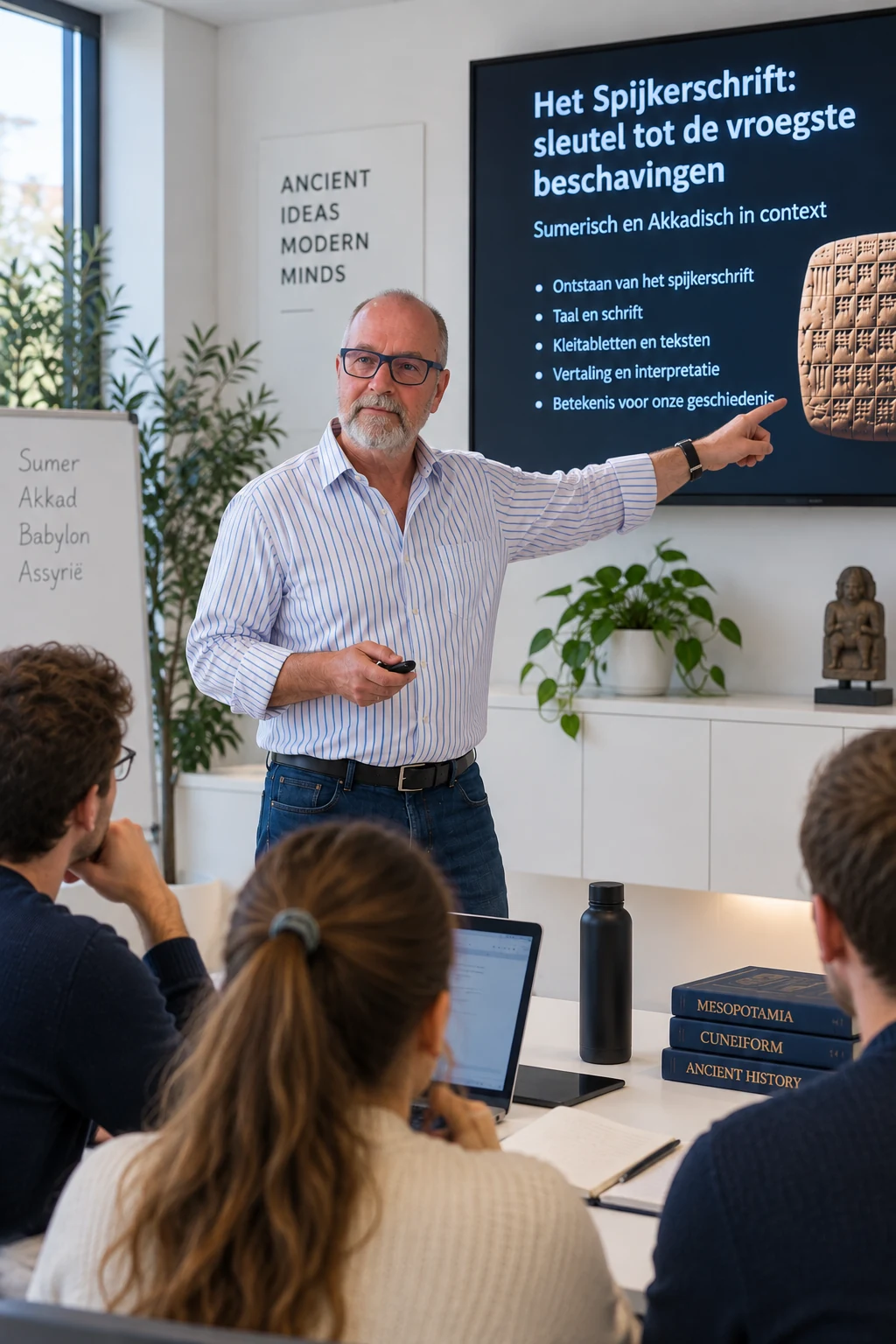
Rinus van Hagen during a presentation about cuneiform
About me

Curious about the world behind the texts.

I am Rinus van Hagen, a cultural historian, author and independent researcher. My work explores the people, languages and societies behind historical sources, with a particular focus on the Ancient Near East and Mesopotamia.

My research has focused, among other things, on the development, use and historical significance of Mesopotamian cuneiform. My interest is not limited to writing as a system of signs; it extends to the world these signs make accessible: the languages, societies, religious traditions, political structures and everyday practices of ancient Mesopotamia.

Through my publications and earlier teaching activities, I sought to make the history of Mesopotamia and cuneiform accessible to students and interested readers alike. Understanding cuneiform involves more than recognising signs and grammatical rules: texts must also be placed in their historical and linguistic context.

From the earliest signs to Sumerian and Akkadian sentences, every text offers a glimpse into the way Mesopotamian scribes recorded their world. Cuneiform is not merely an ancient writing system; it is a gateway to a world that has disappeared. By studying its sources carefully, we can hear the voices of the people behind the clay tablets once more.

Cultural historyMesopotamiaCuneiformResearch & publications
Research & publications

My work

My books and research offer an enduring exploration of the past, with particular attention to Mesopotamia and cuneiform.

01 / Cultural history

Sources and civilisations

Mesopotamian cuneiform lies at the heart of my research and writing: how it developed, how it was used and what it tells us about the societies that employed it. Clay tablets are more than isolated documents; they are historical sources best understood by considering language, archaeology, religion, administration and everyday life together.

02 / Research

The world behind the script

I am interested in the languages, religious traditions, political structures and everyday practices of ancient Mesopotamia. From the earliest cities to Sumerian and Akkadian texts, written sources help us understand the people behind the clay tablets.

03 / Books & publications

Telling history accessibly

My publications cover Sumer, Mesopotamia, Assyria and cuneiform, as well as the classical world and European cultural history. I aim to present complex subjects carefully and accessibly, with attention to the ideas, structures and people behind historical events. You can explore my books on the publications page.

My specialisation

The world of Mesopotamia

From the first cities and the development of writing to the languages, religions and societies of Sumer, Akkad, Babylonia and Assyria.

Cuneiform

Wedge-shaped impressions in clay developed into a versatile writing system. The tablets preserve accounts, letters, laws, prayers and literature.

Books on cuneiform →

Sumer and the first cities

Uruk, Ur and other cities help us understand the rise of urban life, institutions, trade and scribal education.

Explore my books on Mesopotamia →

Language, text and context

Through Sumerian and Akkadian, the signs find their voice. Transliteration and historical context help us read and interpret texts carefully.

View all publications →
A clay tablet is more than a text. It is a trace of people, their ideas and the world in which they lived.